In the modern world, landscape architecture means much more than just the creation of outdoor spaces. Now the task is to find the perfect combination of durability, comfort, and visual harmony of the materials used. And the material, first of all, is chosen according to its properties, rather than for the visual effect alone.
That is why it is so important to have a reliable stone manufacturer at each step in designing an expensive object. The choice of materials will influence both the aesthetics and functionality of the final result.
Why stone is needed in landscape architecture today
As you know, working with landscape architecture involves designing spaces that are constantly changing. Heat, humidity, dust, and even human interaction – all these affect the performance of materials used. Unlike indoor objects, outside things must remain functional for many years, regardless of environmental effects.
Main reasons to use stone materials:
- Increased durability in the outdoor environment
- Resistance to various changes in the climate
- Low maintenance costs
- Compatibility with the natural environment
In regions like Bhopal, these decisions become even more important. Projects involving wall cladding in Bhopal must consider seasonal heat, moisture shifts, and dust exposure. Material selection here directly impacts long-term maintenance and visual consistency.
1. Sandstone for Warm and Adapted Spaces
Sandstone still remains among the most popular materials used by landscape architects. Natural diversity and softness of the stone make it an ideal choice.
Why it works perfectly:
- Perfect natural colors are perfect for outdoor environment
- Simple to combine with vegetation and water elements
- Great for contemporary and classic design styles
- Provides natural softness even for larger spaces
The usage of sandstone in stone cladding gives designers the opportunity to achieve the sense of depth without overwhelming the architecture. It is especially suitable for residential and courtyard landscape design.
2. Limestone for Smooth and Elegance
Limestone can be recommended for designing projects that require simplicity and elegance.
Advantages:
- Uniform texture and surface finish
- Neutral tones for modern style design
- Suitable for institutional, hotel and public landscapes
- Provides visual harmony in structured designs
Proper selection and production process in the company of stone manufacturers guarantee the smoothness and uniformity of limestone in larger areas of premium stone cladding.
3. Granite for High Durability Areas
Granite is one of the strongest natural stones for landscape architecture.
Recommended for:
- Driveways and walkways
- Outdoor high footfall zones
- Exposed to weather
Key benefits:
- Extremely high strength and density
- Resistant to scratches and heavy load
- Long lifespan with minimal maintenance
In climates like Bhopal, granite performs well, since heat and dust exposure are constant challenges.
4. Kadappa Stone for Structural Performance
Kadappa stone is an excellent choice for structural and foundational applications.
Reasons architects use Kadappa stone:
- High load-bearing capacity
- Strong structure in layered construction
- Deep color creates a strong contrast in composition
- Suits large-scale structures
If obtained from a trusted stone manufacturer, Kadappa will always provide high performance and quality finishes in large stone cladding designs.
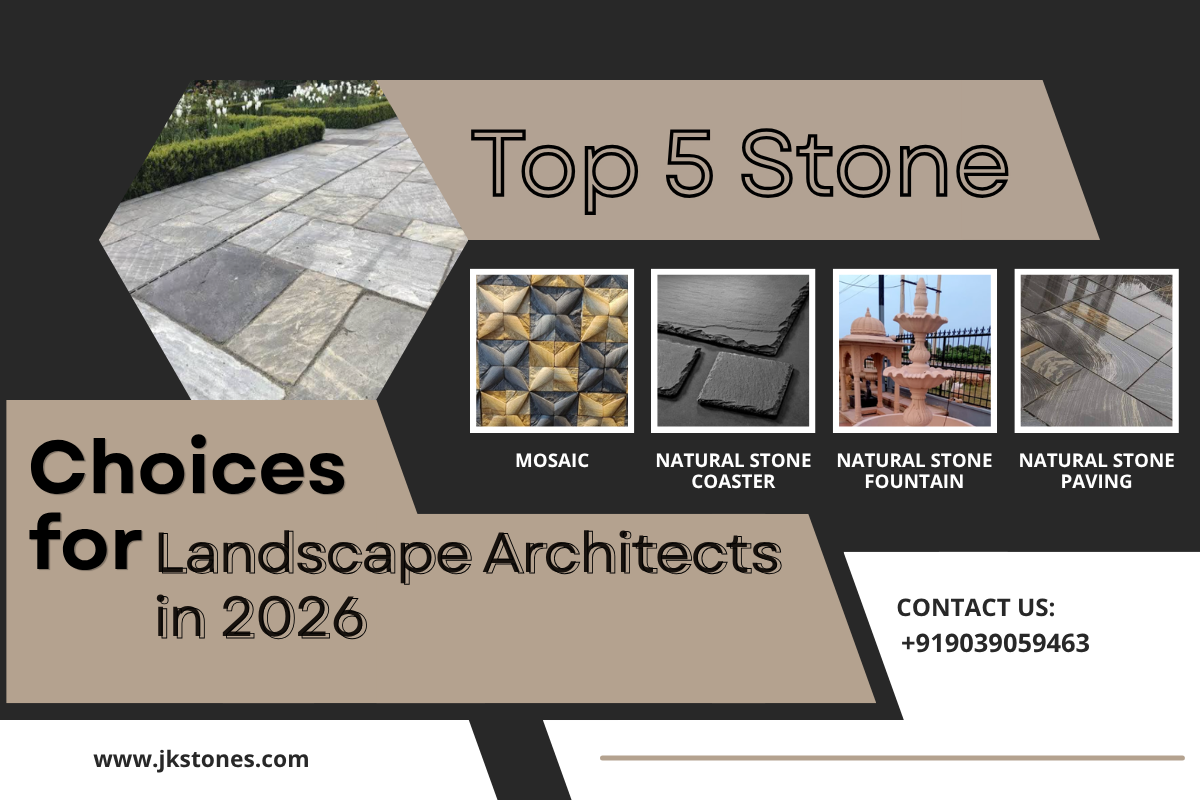
5. Paving Stones for Movement-Centric Outdoor Designs
Paving stones play a crucial role in creating functional outdoor spaces.
Attributes:
- High traction
- Water drainage ability
- Wide pattern design possibilities
- Suitable for public and private landscapes
- Widely employed with wall cladding in Bhopal.
How Landscape Architects Make the Decision on the Stone
Before selecting materials, professionals consider:
- Climate conditions
- Surface usage intensity
- Maintenance requirements
- Visual harmony with surroundings
- Long-term durability expectations
Structured approach to selecting stone materials is what sets quality landscaping apart from regular one.
Conclusion
Landscape architecture in 2026 will involve selecting performance-driven materials. There will be a need to ensure that each stone performs effectively within the intended landscape. The selection of stones is critical for effective stone cladding. It is equally essential to use these stones in their appropriate contexts.
As a stone company, JK Stones provides you with materials that perform well under real circumstances.
Frequently Asked Questions
1. Which stone is best to employ in landscape architecture?
There is no stone that would be best in every case. The best stone depends on function, design, and climatic conditions. Sandstone, granite, limestone, Kadappa, and paving stones are all used in landscape architecture for specific purposes.
2. Which stone is ideal for outdoor durability?
Granite is among the most durable stones since it is highly dense and can withstand weather conditions, pressure, and abrasion.
3. What makes choosing the right stone manufacturer crucial?
It is necessary to choose the right stone manufacturer because he/she guarantees the following: Project success, Quality of material, Proper cutting and polishing, Performance reliability