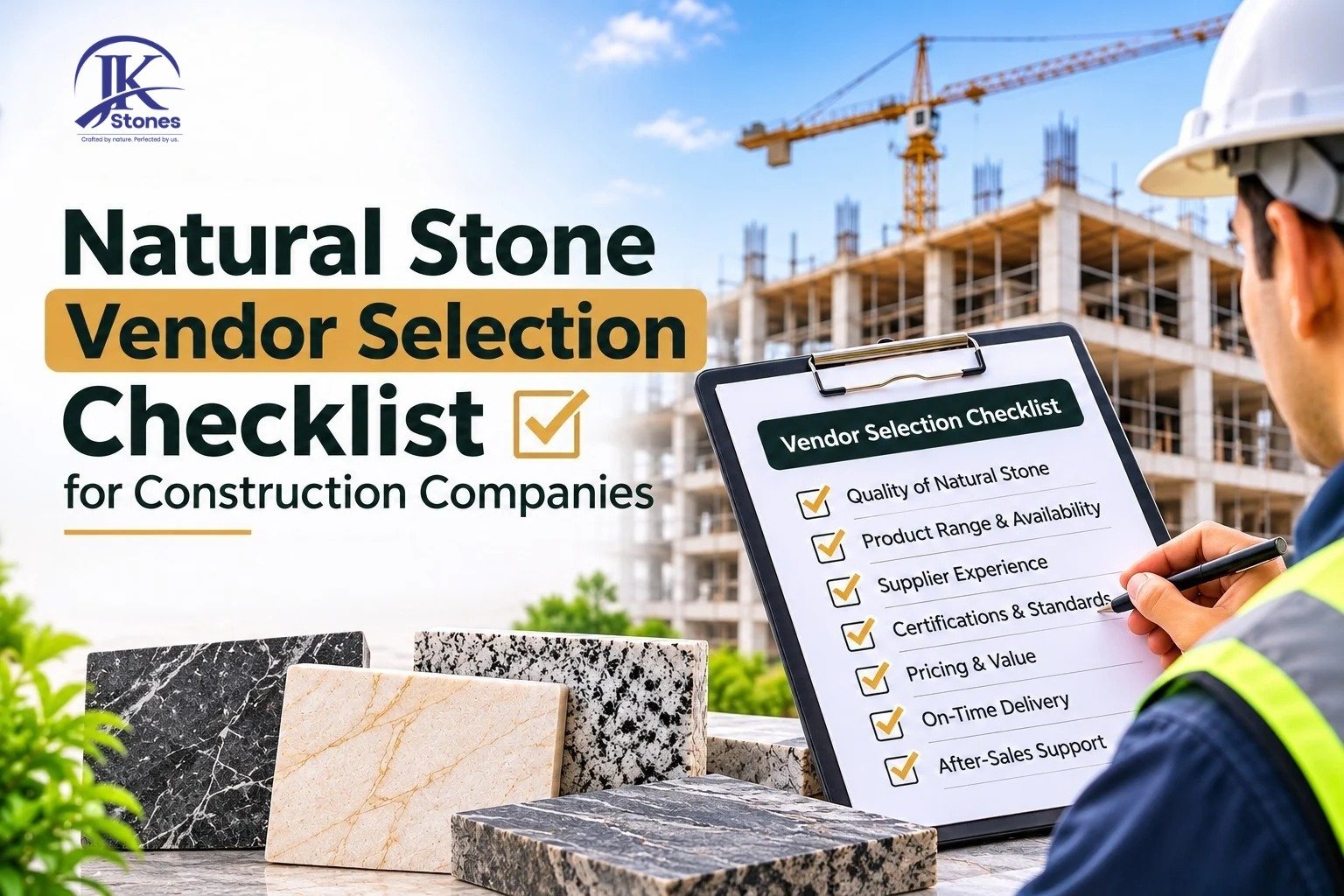
Choosing a good natural stone supplier is among the tasks involved in construction procurement. The quality of the natural stone, supply and delivery can affect various factors of a construction project, including project timeline, installation cost and aesthetics of a building. In addition, it is crucial for construction companies that handle residential, commercial or infrastructure projects to evaluate natural stone suppliers in a way that goes beyond price comparison.
Natural stone suppliers offer natural stone cladding for construction of walls, pavings for outdoors, etc. In order to procure natural stone products, construction companies should evaluate product quality, technical specifications, production capability and commercial terms before placing an order.
This guide explains how to evaluate natural stone suppliers, reduce procurement risks and source suitable materials for construction projects.
1. Check Natural Stone Supplier’s Credentials
Prior to discussing prices and options, it is essential to check the credentials of a natural stone supplier. A reputable supplier should be open and provide the necessary information regarding its operations, sourcing and capability to supply ordered products.
Check the following:
- Business registration: Check the name, address and registration of the company.
- GST registration: Check GST registration, where relevant, for domestic procurement.
- Industry experience: Inquire about previous residential, commercial or landscaping projects.
- Manufacturing capabilities: Understand whether the company manufactures its own stone or buys it from third parties.
- Customer references: Look through relevant projects and obtain references if possible.
A natural stone supplier does not need to have its own quarry or manufacturing facility to work properly. It should only be capable of showcasing its strengths, ensuring constant quality and meeting the requirements specified in the purchase order.
2. Inspect Stone Quality and Technical Requirements
The stone quality needs to be checked according to technical requirements of the project. Natural materials can differ in terms of colour, structure and patterns, making clear specifications necessary.
If you want to inspect the natural stone supplier, request product information and samples prior to the order approval.
Important requirements include:
- Stone variety and source: Clarify the type of stone that will be supplied.
- Dimensions and thickness: Make sure they comply with your drawings and requirements.
- Finish: Check whether the finish is appropriate for your application.
- Colour variation: Agree on the permissible variation range.
- Technical requirements: Ask for relevant stone characteristics.
- Inspection criteria: Specify how the defects, dimensional differences and damaged material will be assessed.
If the performance characteristics of a material are of prime importance, request the corresponding laboratory test reports. CDOS in India is known to offer testing services for dimensional stones and decorative stones. Select testing criteria depending on the material, application and the standards.
3. Evaluate Materials According to Application
The applicability of a stone depends on where and how it will be installed. A material suitable for an exterior wall will not necessarily fit for paving or some other application.
For instance, natural stone claddings require careful evaluation of stone size, weight, finish and the fixing system to be used. It should be determined by the project’s architecture and installation technique.
As well, natural stone pavings should be evaluated according to their application specifics, expected pedestrian traffic and slip resistance requirements.
Before accepting a material, the construction company should perform the following evaluations:
- Ensure the material variety matches the application.
- Verify the specified stone finish and dimensions.
- Evaluate relevant performance requirements.
- Discuss installation and maintenance aspects.
- Accept physical samples or a mock-up for projects where the look of the stone matters.
These measures help ensure that the material selected fits the purpose and satisfies all functional and aesthetic criteria.
4. Assessing the Production Capacity and Supply Reliability
A supplier may deliver an outstanding sample but fail to meet the required delivery schedule. Such situations may affect the process of installation as well as the rest of the construction activities.
A reliable natural stone provider should be able to provide the details regarding its current stock, production capacity and schedule of delivery.
Questions to ask include:
- Is the requested volume currently in stock?
- What time will be needed for cutting, sizing and polishing?
- Are the requested specifications going to be available during the entire process?
- Is partial delivery possible?
- How is the matter going to be resolved if the required material will be out of stock?
- How is a shortage of material and rejections going to be handled?
If it is a big project, ensure that the vendor provides the supply plan before signing the purchase order. It should be specified whether the same variety of stones and finish will be provided if an extra material will be required later.
5. Comparing Quotations and Total Procurement Cost
The cheapest price does not necessarily mean the most economical choice. Differences in stone thickness, finish, size and packaging and transportation will create difficulties with quotation comparison.
Construction companies should receive detailed quotations from all selected vendors and make sure that specifications remain consistent.
A proper quotation comparison should include:
- Material price per square foot or another applicable measure.
- Type of natural stone, stone’s dimension, thickness and finish.
- Processing, taxes and other charges applicable.
- Packing, transportation and loading costs.
- Minimum purchase quantity, if specified by a vendor.
- Production and delivery timelines.
- Payment schedule and replacement conditions.
When procurement of natural stone cladding and natural stone pavings is considered, the procurement team should also account for installation-related requirements while calculating the total cost of the project.
Total cost of the material procurement rather than just quoted material price makes more sense as the basis of procurement decision.
6. Review Packaging, Transportation and Delivery
Natural stone should be delivered in a good condition. Improper handling and insufficient packaging might result in cracked edges, stone breakage and material waste.
Make sure that logistics of the vendor are clearly understood before ordering.
Use this checklist:
- Confirm the address of delivery and estimated delivery dates.
- Know how your natural stone will be packaged and protected.
- Determine who will be responsible for loading and unloading.
- Identify who is liable for any transit damage.
- Make sure you know what documentations are needed for delivery.
- Agree on procedures for reporting shortages or damaged goods.
The delivery plan should be in writing as it will help coordinate the arrival of materials with installation schedules and space availability on the construction site.
7. Ensure Proper Documentation and Quality Control
Documentations are critical in establishing accountability during the procurement process. In addition, a vendor must be able to present clear product specification and documentation that relates to the material being delivered.
Request from the vendor:
- Approved product specifications.
- Laboratory test reports.
- Business and tax documents.
- Purchase orders and detailed invoices.
- Inspection and delivery records.
- Quality certificates in case such claims are made.
In addition, a stone vendor must be ready to explain his inspection process and measures he will use to handle any non-compliance in the product.
For bigger consignments, consider the option of conducting an inspection of the product prior to dispatch.
8. Check Out the Responsible Sourcing and After-Sales Service
The construction company should also evaluate its vendors’ environmental and social performance if the project involves the particular procurement policy.
Get more information on the material source and sustainability documents to verify the vendor’s environmental claims and certificates.
After-sales service is no less important than responsible sourcing. The vendor should have some policy regarding the issues with the material discrepancy, damage, and supplies.
Conclusion: Find the Right Natural Stone Supplier
To find a trustworthy supplier, you should conduct a systematic evaluation of material quality, documentation, production, pricing, and delivery. By checking the list of items, you can reduce procurement risks and make reasonable decisions.
Whether you want to get natural stone cladding for building facades or natural stone pavings for courtyards, walkways and landscaping, you should care about proper specifications and supplies.
JK Stones offers various natural stones for architectural and landscaping purposes. Construction companies can get acquainted with natural stone products, check out their specifications, and pick up the most appropriate materials.
Following a comprehensive procedure of vendor selection, buyers will make sure that every purchase is supported by clear requirements, transparent commercial conditions, and well-considered materials.
Frequently Asked Questions
A: Consider verifying their company information, quality of products, technical specifications, production capacity, price and terms of delivery before making the purchase.
A: The samples will give you the opportunity to assess color, texture and finish of the stones before confirming the purchase in bulk. In case of large projects, a mock-up could also be used in assessing the proposed look.
A: Buyers should verify the dimensions, thickness, weight, finish and suitability of the proposed method of fixing the stone.
A: Natural stone quotations should be compared by using the same type of stone, specification, quantity and finish. Consider all other costs such as processing, taxes and transport costs in the process.