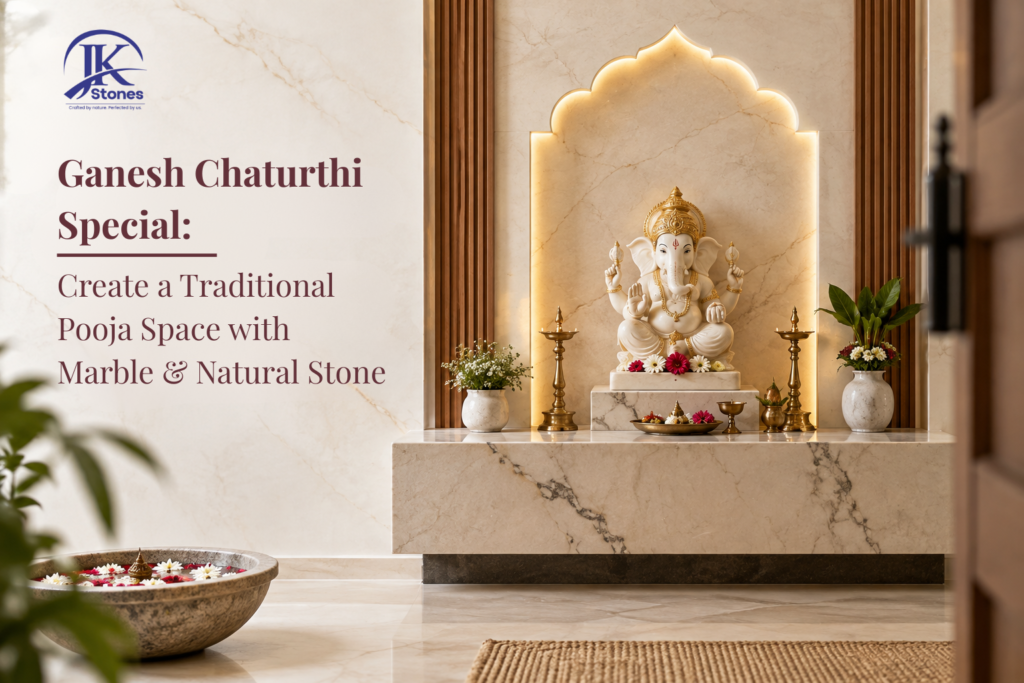
Ganesh Chaturthi becomes an occasion when homes are filled with devotion, flowers, diyas and presence of Bappa. As much as the festivities will be celebrated in few days, the pooja space might become a permanent fixture in your home.
Natural stone is a wonderful medium of bringing this traditional architecture into a home setting. From marble backgrounds to carved details and stone artifacts, there are many ways to create a traditional pooja space out of a regular corner in the house.
Start with the Marble Base
Marble has always been a part of temples, shrines and stone carving in India. Its smooth surface, patterns and capacity of detail carving make it an ideal material for the creation of a traditional pooja setting.
Some of the possibilities of using marble in a home mandir are:
- As the flooring of a designated pooja space
- For the altar or platform
- As a background for the idol
- For carved pillars and architectural elements
- As shelves for diyas and other small pooja elements
White marble will create a bright setting, while other natural stones will add warmth to it.
Let the Walls Show Your Traditions
No need to fill the pooja space with decorations to make it look traditional.
Well-thought natural stone walls with carved panels, jaalis or arched design can turn out to be the central visual component. This way, the idol will stay central and the architectural character will be created for the background without overwhelming the whole space.
This approach will also allow you to highlight the stone material itself.
Natural stone has color and texture variations which make it unique and cannot be replicated using other manufactured materials.
Add Stone Artefacts Around Bappa
The mandir should not necessarily end with the altar.
Some stone artefacts can introduce additional craftsmanship into the pooja space. A carved Ganesha sculpture, diya holder, decorative bowl or any other handcrafted stone element can serve as a compliment to the main idol and maintain the material language consistency.
Indian stone carving has a long architectural tradition including temples, sculptures and decorative elements. For instance, Rajasthan has rich heritage in the field of marble and sandstone carving of deities, jaalis and architectural elements.
For Ganesh Chaturthi, one can use:
- Stone Ganesha statues
- Diya stone holders and lamps
- Stone bowls
- Small traditional motifs
- Stone floral or geometric carving
This time you will need less but carefully selected pieces rather than a lot of objects occupying the pooja area.
Bring in Some Natural Texture
Traditional does not necessarily mean extremely ornate.
An ensemble of smooth marble with natural stone textures can help you create a more contemporary version of the traditional mandir. The contrast of a carved stone panel against marble background, for instance, can add depth without overwhelming the room visually.
This technique is especially applicable for a contemporary home when the pooja space has to blend in with the rest of the interior.
Make the Festival Space Extraordinary
Even the permanent mandir can be adapted during the Ganesh Chaturthi celebration.
Flowers, a small toran, diyas and traditional fabric will add color to the natural stone leaving it fully visible. Thus, the stone wall will remain the architectural focal point of the mandir, while the festive items will introduce the spirit of the festival.
One can also use stone artefacts as the part of the Ganesh Chaturthi celebration set.
Plan the Pooja Space Beyond Ganesh Chaturthi
A properly designed pooja space should be relevant throughout the year.
Following the festivities, once the flowers and decorative elements have been packed up, it might make sense for the marble, stonework, and stone artefacts to remain as a permanent feature of this special space in the home.
And this is what makes natural stone a fascinating option for those looking to integrate their festive decorations into a permanently usable home pooja space.
A Traditional Interior From a Contemporary Perspective
Creating a modern day pooja room need not mean making a choice between being modern and being traditionally rooted.
The marble could lend itself to the clean-lined architectural elements, while the natural stone could bring in textures and carved detailing.
And finally, the stone artefacts could help personalize this space.
The end result could be both elegant and simple while still maintaining an authentic Indian design sensibility without being overdone.
From the extensive collection at JK Stones, the use of natural stone extends from architectural uses to natural crafting and decorative stonework. The variety ranges from stone flooring, wall cladding, mosaics, architectural stone, and crafted stone elements.
Incorporating marble, natural stone and stone artefacts into a pooja space this Ganesh Chaturthi can help bring in tradition to a contemporary setting.
FAQs
Q1: Is marble appropriate for a house pooja place?
A: Marble is extensively utilized in Indian sacred structures and sculpturing. For a house mandir, marble can be used for floors, altars, walls, platforms, and other decorations according to the design and maintenance requirements.
Q2: How do I use natural stone in a pooja room?
A: For instance, natural stone can be used for floors, wall cladding, carved decorations, shelves, pillars, borders and other architectural decorations.
Q3: What stone artifacts are available for a pooja room?
A: These include Ganesha sculptures, carved diyas, bowls and other crafted artifacts which can complement the main mandir and add aesthetic value to the pooja room.
Q4: Is it possible to have a marble mandir in a modern home?
A: Yes. It is possible to incorporate a plain marble altar, marble background, or combination of marble with minimal carved decorations to create a traditional pooja place which will suit a contemporary interior design.
Q5: How do I decorate a stone mandir for Ganesh Chaturthi?
A: The decorations such as flowers, diyas, traditional cloths, torans and others can be used to make the decoration festive. Some parts of the natural stone should still be visible to incorporate the architectural and sculptural design in general decor.
Q6: Why opt for natural stones to build your pooja room permanently?
A: Natural stones can give you both the architectural elegance and the longevity to incorporate into both structure and decor. With proper design, your pooja room will suit both Ganesh Chaturthi and daily poojas.