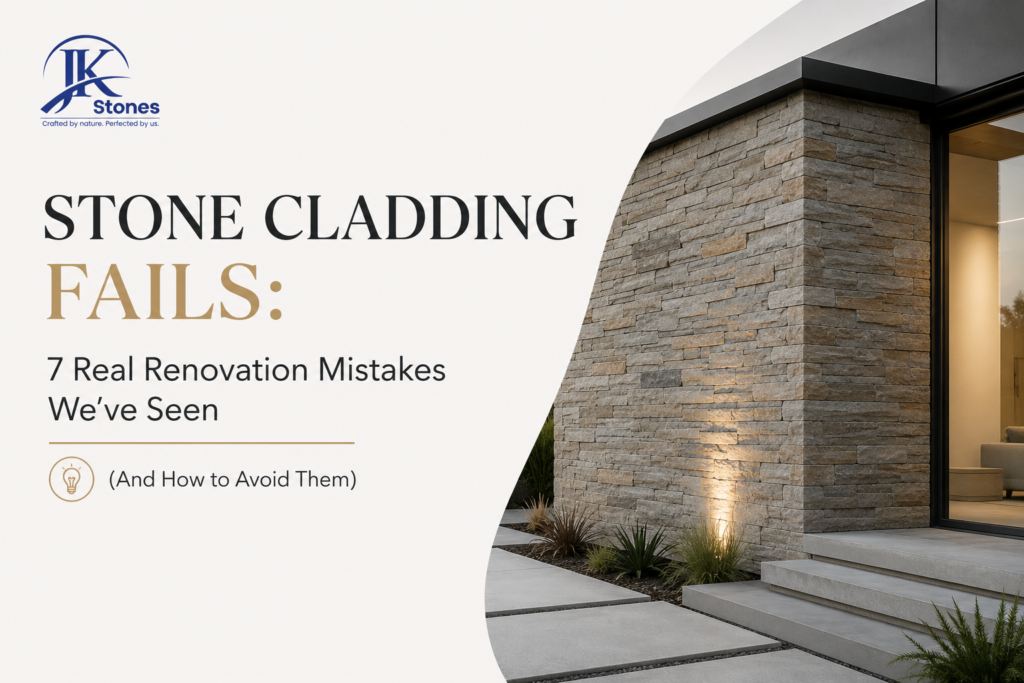
During the last years, stone cladding has been one of the main trends in modern architecture. It creates luxurious home elevations, balcony walls, or feature walls in the living room.
Unfortunately, although good cladding makes the building outstanding, bad installation can destroy the result. Many renovation professionals in 2026 continue to observe avoidable blunders loosened stones, water leakage, cracked walls, rough surfaces, and costly fixings due to incorrect installation practices.
Now, we present to you 7 most frequent mistakes related to stone cladding and how to avoid them.
1. Picking the Wrong Type of Natural Stone
The first and foremost mistake made by homeowners is that they select the stone material solely by its appearance.
Some types of stone are not resistant to weather conditions; therefore, you need to consider their water absorption capacity, maintenance cost, etc., before making any decision.
As an example, external walls should be cladded with durable materials such as slate or quartzite. Thus, do not forget to examine all the qualities of the selected stone before making a deal because an increased natural stone cladding price pays off.
2. Not Preparing the Wall Surface Correctly
There are cases when problems arise not due to the installation itself but before that. The wall can be dusty, wet, uneven, or have insufficient strength, which will weaken the adhesion and, in time, lead to loosening of the stone wall panel or detachment of the stones from the wall.
However, professionals always correctly prepare the surface before installation.
For example, they do the following steps:
- Clean the wall
- Fix any cracks on it
- Level the wall surface
- Apply appropriate primer or bonding material
3. Applying Incorrect Type of Adhesive
In some instances, clients use standard tile glue for installing heavy stones. However, natural stones are heavier than ceramic tiles and thus require high-quality adhesive, as the latter will crack under heat, moisture, or other stress.
It is especially important when installing on external walls and balconies since temperature variations are frequent there.
Experienced workers normally use polymer-modified adhesives or those for exterior claddings.
4. No Waterproofing
One of the major problems that occur in stone cladding failures is water leakage. If the waterproofing measures are not taken properly, then the water gradually starts penetrating behind the cladded stones and causes:
- Damp spots
- Mould
- Whitish salty deposits
- Failure of adhesives
- Damage to the wall
There have been many examples of renovation jobs done in monsoon seasons when it was found that due to improper waterproofing there was water seepage behind stone walls.
5. Improper Alignment and Spacing
Even if the materials used are of very good quality, but are improperly installed, they will end up looking cheap.
Improper spacing, incorrect alignment, or inconsistent patterns are some common flaws which affect the overall look immediately.
In professional installation, the dry-laying technique is used for ensuring uniformity in the arrangement of stones as far as texture, color, and patterns are concerned. Stone Wall Panels are becoming increasingly popular for the same reason.
6. Disregarding Expansion Joints
Stone naturally expands and contracts due to changes in temperature. Without expansion joints, the walls will eventually experience cracking and pressure damage.
This issue occurs frequently in walls with considerable external exposure to direct sunlight. An experienced installer will know where expansion joints should be installed for safety purposes.
7. Hiring Unexperienced Installers
This mistake is likely to be the most expensive of all. While many homeowners spend thousands of dollars on quality stone products, they cut corners on labour expenses. This results in improper installation that becomes the reason for stone cladding failure.
Stones installed improperly can become detached, cracked, and even water-soaked after only a few years.
Ensure you hire an experienced team that knows how to install natural stones, seal them, align and fix them properly. Slightly increased costs when installing natural stone cladding is usually worth it.
Conclusion
Properly installed stone cladding will not only last for decades, but it will also contribute to the elegance and durability of the house. But even small installation mistakes may easily ruin any renovation.
Poor waterproofing, inappropriate adhesive materials, misalignment, or even incompetent labor are just some of the factors that usually cause stone cladding failures and they can be easily avoided.
No matter whether you want to go for traditional stone finish or opt for modern stone wall panels – selecting the proper material and professional installers can make a huge difference.
Frequently Asked Questions
Q1: Why does stone cladding fail?
A: The major causes of stone cladding failure include improper installation, incorrect application of adhesive, absence of waterproofing, or inadequate wall preparation.
Q2: Are stone wall panels durable?
A: Yes, stone wall panels are extremely durable, low-maintenance, and versatile enough to be used inside and outside the buildings.
Q3: Does natural stone cladding need waterproofing?
A: Yes, proper waterproofing helps to ensure protection from water damage and prolong service life of stone cladding.
Q4: Is expensive natural stone cladding material always a superior choice?
A: Not necessarily, although superior natural stones do give better resilience, textures, and resistance to adverse climatic conditions.